
Most people treat stress as a mental problem. Something you manage with better habits, a cleaner calendar, maybe a meditation app. Work through it. Breathe through it. Talk yourself down.
I’ve never had that option. For me, stress has always had a physical address.
I have Spinocerebellar Ataxia, a progressive neurological condition that affects balance, coordination, and movement. But one thing people don’t talk about much when living with a condition like this is what happens internally, before anything is visible from the outside. Our nervous systems don’t wait for permission. They respond to pressure the way they were wired to respond, and when a neurological condition is layered on top of that, the response can be loud.
People with ataxia and other neurological conditions often report that stress doesn’t just feel bad mentally. It shows up physically, sometimes visibly. That connection doesn’t get enough attention.
In 2011, my head tremors started. Nobody could give me a definitive cause. But I’ve always believed, and I still believe, that stress plays a significant role in triggering them. They followed a pattern for years from 2011 to 2021: present for roughly a month, gone for two. Predictable in their unpredictability. Since then, I’ve had two more episodes, both following the same pattern, each lasting roughly a month. If you want the full background on that journey, I’ve written about it here and here.
There’s a difference between stress and what I’d call internal nerves, and they’re more connected than they seem.
For me, stress is cumulative. It builds over days or weeks, whether from a big life change, a new public exposure, or a long stretch of uncertainty. Internal nerves are more immediate. That feeling before a hard conversation or the hum in your chest before you walk into a room. Both live in the nervous system, and both have consequences.
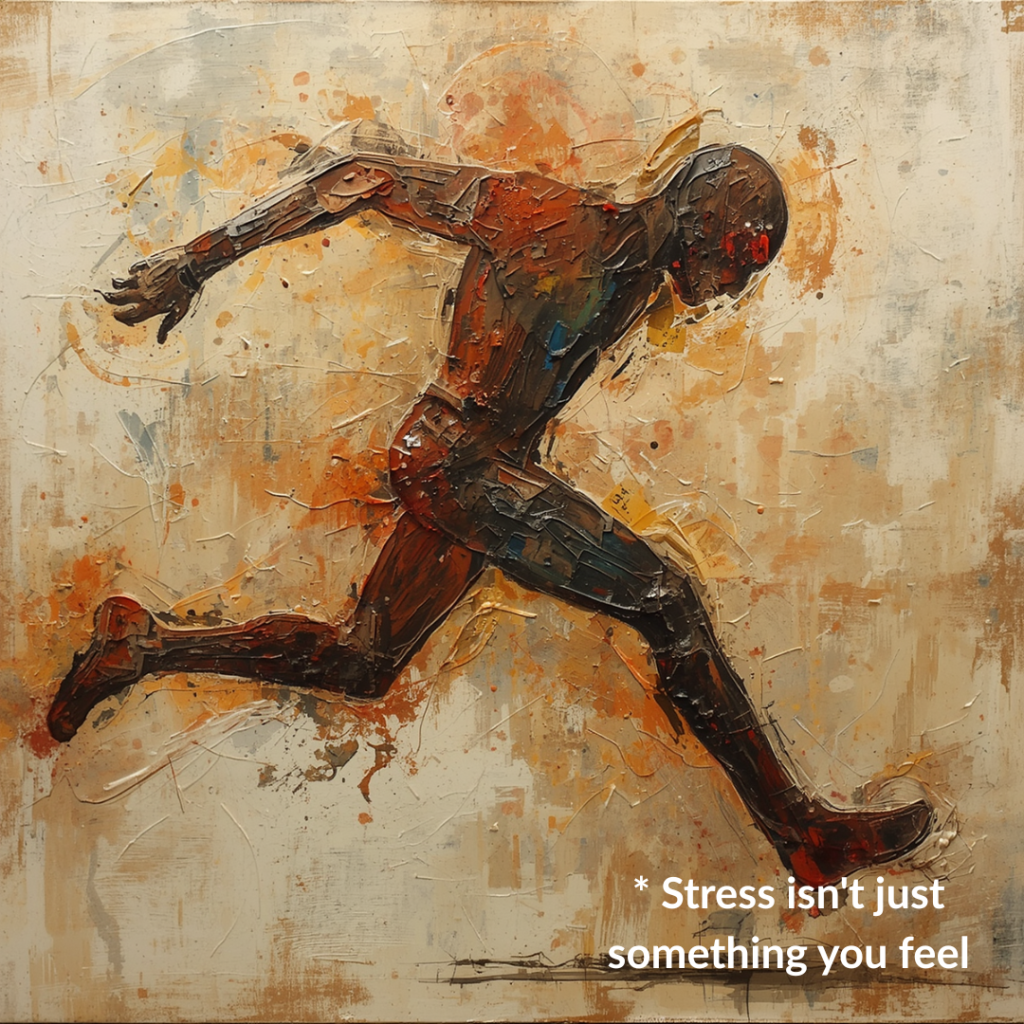
I’ve had an overactive internal nervous system for as long as I can remember. That’s not a complaint; it’s just something I’ve had to work with. Living with Ataxia means working with it isn’t optional.
I’m also not alone in this. Stress and the autonomic nervous system are closely connected across a lot of neurological conditions, including multiple sclerosis, Parkinson’s disease, and dysautonomia. For people living with conditions like these, stress isn’t just something you feel emotionally. It shows up physically. For me, that’s always been true.
When the Nervous System Shows Up Uninvited
This didn’t start with Ataxia. It started much earlier than that.
Early in my career, I worked in financial services. During training, I remember a conversation with a few colleagues about how I handle meetings when my nerves are on edge. Not about tremors; this was years before any of that. Just about showing up professionally while something else runs underneath. I remember thinking it was the first time I had ever said it out loud. I wasn’t falling apart; instead, I was doing my job. But there was always something extra happening inside that nobody could see.
Part of my job at one point was giving new employee orientation presentations at the hospital, sometimes to rooms of more than 100 people. My internal nerves were intense every single time. But I did it. Because sometimes life doesn’t offer the option to wait until you feel calm.
Then came Toastmasters. It was around 2011 or 2012, a regular weekly meeting in an office building in downtown Albuquerque. Nothing formal. It was just my turn that week. A few days before, my head tremors started. Bad timing doesn’t cover it. I had everything prepared, walked in, and pulled aside the person running the meeting to explain what was happening. She asked if I still wanted to try. I said yes.
My heart was pounding as I waited for my turn. The tremors were intensifying, and there was nothing I could do about it. When my name was called, I stumbled to the front, explained what was going on, and asked them to bear with me. Then I started. The tremors were uncontrollable. I couldn’t read my notes. I couldn’t make out faces in the room, just blurs. No idea whether it was going well or terribly. When it was over, people came up and said they admired me for just getting up there.
In 2023, when I launched this blog, the tremors came back.
Putting my story online with my name on it for anyone to read was the most vulnerable I had ever been, or at least a new kind of vulnerable. I was stepping into completely unfamiliar territory, and my nervous system knew it before I had fully admitted it to myself.
And just two months ago, stress hit hard again across several areas of my life at once. No single dramatic moment, just the weight of it building. Same pattern, same response.
That’s not just my experience. That’s the nervous system doing what nervous systems do under pressure, except when you have a neurological condition layered on top, the volume gets turned up in ways most people never have to think about.
The Thing a Chronic Condition Forces You to Learn
I haven’t figured out how to eliminate stress. I’m not sure that’s the goal.
What I’ve realized is that my nervous system is always part of the conversation, whether I invite it or not. Ignoring it doesn’t make it quieter. But understanding it, knowing the pattern, recognizing the warning signs, respecting what it’s telling me without being controlled by it, that’s a different relationship entirely.
Most people spend a lifetime avoiding the kind of self-knowledge that a chronic condition forces on you early. I’m not saying the condition is a gift. It isn’t. But the awareness that comes from paying close attention to your body has genuine value.
If you’re living with a neurological condition and you recognize what I’m describing, you’re not imagining it. The internal experience is real, it’s documented, and it matters. Living in slow motion has a way of making you notice things others walk right past.
And if you’re a caregiver or supporting someone with a movement disorder, understanding that stress isn’t just emotional for them is worth knowing. The nervous system responds to pressure with the tools it has. Sometimes those tools are visible. Sometimes they’re not.
Moving Forward Without Waiting for Calm
Honestly, nerves have stopped me from taking some risks over the years and pushed me through others. I don’t think that makes me unique. Most people have the same tug-of-war. What’s different is that I’ve never had the option to ignore it. When your nervous system is part of a larger condition, you get very familiar with it, whether you want to or not. You learn to read it. Sometimes you listen. Sometimes you don’t.
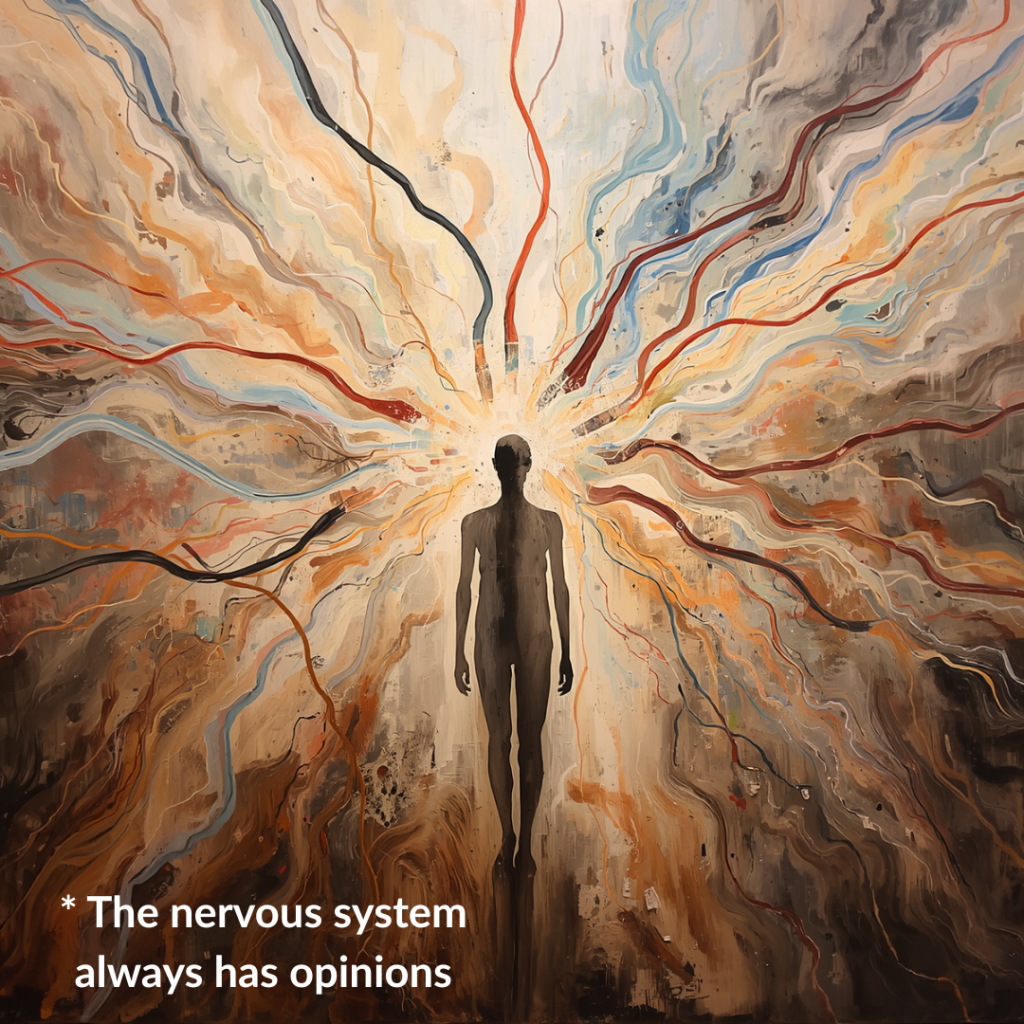
You learn, over time, to make peace with the fact that your body has opinions. Some of those opinions are loud. Some of them show up at inconvenient times. But they don’t get the final vote.
Keep In Touch
If this landed somewhere familiar for you, I’d love for you to join the community at michaelmantz.com. And if you’re looking for something that carries that same energy, take a look at the Life in Slow Motion design over at InspireThread. It was made with exactly this kind of experience in mind.