


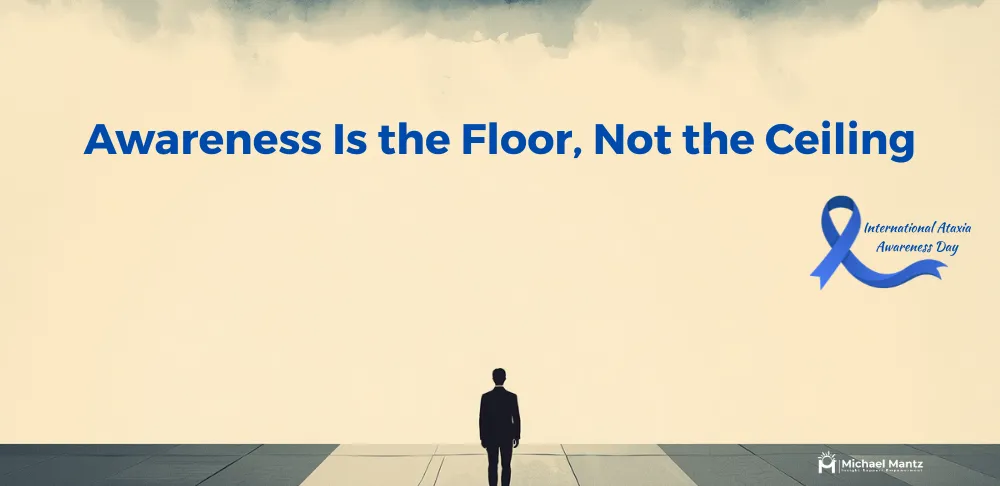
What actually changes in your life the day after someone becomes aware of it?
I’ve been thinking about that question lately.
International Ataxia Awareness Day is coming up, so many of us in the Ataxia community will spend the day doing exactly what the name suggests. We’ll share our stories and try to explain a disease most people have never heard of. Organizations will share information, families will post pictures, and there will be facts, hashtags, fundraisers, ribbons, and probably more people hearing the word Ataxia in one day than on almost any other day of the year.
That’s a good thing. Actually, it’s a great thing.
I know how much it matters because I remember a time when almost nobody around me knew what Ataxia was. I’ve lived with it for decades and have spent the past few years writing openly about how it affects balance, coordination, independence, relationships, and the ordinary parts of life that don’t fit neatly into a medical definition.
But lately I’ve found myself wondering what happens next.
Someone reads an article, watches a video, or pauses long enough to learn what Ataxia is. For a few minutes, something that was invisible to them becomes visible. Then they keep scrolling.
That’s not meant to be critical. I do the same thing. More competes for our attention than any of us can reasonably hold at once: diseases and causes we’ve never heard of, families facing hardships, and crises unfolding around the world. We can genuinely care about all of it and still have our own lives to live, responsibilities to manage, and an ordinary Tuesday to get through.
So maybe the challenge isn’t simply making people aware anymore. Maybe it’s figuring out what happens once we have their attention, even if only for a little while.
That also means being realistic about what awareness can accomplish. It was never meant to cure a disease. A hashtag can’t fund a laboratory on its own, and a personal story can’t create a treatment. Even knowing the word Ataxia doesn’t mean we understand what it’s like to live with it.
None of that makes awareness unimportant. Quite the opposite. Research, funding, understanding, participation, and community are much harder to build if nobody knows there’s something worth paying attention to in the first place.
That’s why I’ve started thinking about awareness differently. Maybe we’ve been treating it as an outcome when it’s really what gives everything else a chance to begin.
Awareness isn’t the ceiling. It’s the floor.
The more interesting question is what becomes possible once people are standing on it with us.
Awareness Is Doing What We Asked It to Do
Before going any further, I think awareness deserves some credit.
It’s easy to see another awareness day, with its ribbons and hashtags, and wonder how much any of it really changes. I’ve wondered the same. Then I think about the alternative: living with a rare disease few people recognize and trying to explain something most people have never had reason to understand.
When I was diagnosed with Ataxia at 28, there wasn’t a community in my pocket. There certainly wasn’t a social feed filled with people openly discussing what it was like to live with a rare neurological disease. Most of the explaining happened one conversation at a time, usually after someone noticed something was different and I had to decide how much I wanted to share.
Today, a newly diagnosed person can search a few words and find organizations, research, support groups, personal stories, and other people living with the disease. I can write about something I’ve experienced, publish it from my desk, and have someone I’ve never met recognize part of their own life in it.
That’s a remarkable change.
Organizations such as the National Ataxia Foundation can connect individual experiences to something larger. Its International Ataxia Awareness Day efforts go beyond simply posting about the disease and include storytelling, education, fundraising, events, and advocacy.
I don’t want to dismiss the ribbon or the hashtag either. It might be someone’s first encounter with a disease they knew nothing about. A personal story could reach a family searching for answers, while seeing others speak openly about Ataxia can remind people living with it that they aren’t the only ones figuring this out.
Awareness opens doors. The challenge is that more doors are open than ever before.
When Everything Can Be Seen, What Stays with Us?
Social media, blogs, podcasts, YouTube, and other online communities have changed who gets to tell a story. We don’t need a newspaper, television station, or publisher to decide our experience is worth sharing before we’re allowed to share it.
I’ve benefited from that myself. MichaelMantz.com wouldn’t have existed in the same way twenty years ago, and neither would many of the connections I’ve made through writing about Ataxia.
But anyone who finds my story can also find thousands of others.
In the same few minutes they spend reading about Ataxia, they might encounter a family raising money for cancer treatment, someone sharing an experience with Parkinson’s disease, or a parent drawing attention to an extremely rare condition. All of those stories matter.
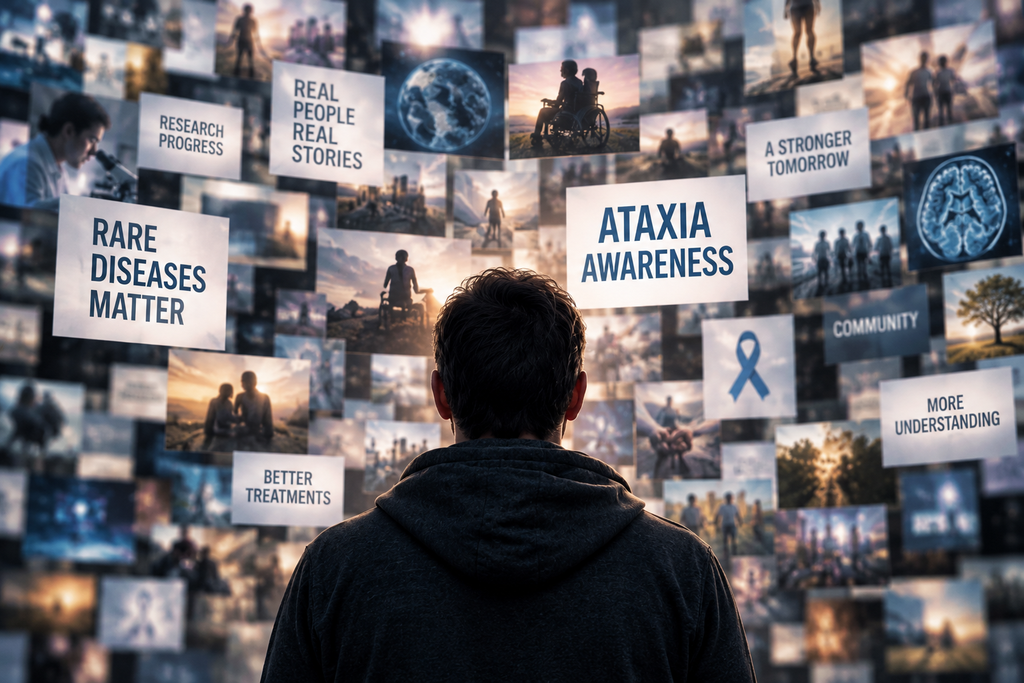
There is simply more worth caring about than any one person can carry.
I don’t think that means people have stopped paying attention. We may actually be paying attention to more things than people had access to before. The problem is that our attention still has limits, even though the amount of information available to us doesn’t.
We can count views, likes, shares, and clicks. Those numbers have value. What is much harder to gauge is what stayed with people afterward. Maybe they remembered a story a week later, became curious enough to learn more, or eventually supported research. For many others, it may have held their attention for thirty seconds before they moved on.
There’s nothing wrong with that. I’ve done the same with countless stories and causes. Caring for a moment and then returning to your own life isn’t indifference. None of us could carry every difficult story we encounter.
Getting people to see something may no longer be the hardest part. The harder question is what stays with them after they look away.
Knowing About Ataxia Isn’t the Same as Understanding the Life
A person can learn that Ataxia is a neurological condition affecting balance, coordination, speech, and movement and still know very little about what it’s actually like to live with it.
How could they? I’ve heard of plenty of conditions, but I couldn’t tell you what an ordinary Tuesday looks like for someone living with them. Knowing something exists and understanding the life behind it are very different.
For me, much of that life doesn’t fit neatly into a definition. I think about stairs before I take them. A crowded room can require more concentration than anyone around me realizes. I’ve learned to adjust things I once did without thinking, only to adjust them again when the first solution no longer works. Some changes are obvious. Others are small enough that no one around me may notice them.
That’s why I’ve spent so much time writing and talking about those details.
I’ve written about how trunk instability changes the way my Ataxia feels, the ordinary tasks that have become harder than they look, and the small adaptations that can help me hold onto independence. I’ve even recently started asking when occupational therapy belongs in that conversation. I also had a chance to talk more openly about living with a rare disease during my conversation on the Being Rare podcast. Those subjects start with Ataxia, but I’m usually trying to get at something a symptom list can’t show: what the changes actually mean in everyday life.
That kind of understanding can change how we respond to people. We may be more patient when someone’s speech sounds different, more understanding when a friend changes plans, or less likely to make assumptions when we see someone struggling to keep their balance. We may begin to recognize that something that seems simple to us can take a great deal of effort for the person doing it.
That matters. But understanding the disease isn’t the same as changing its course.
And that’s where this becomes much more personal for me.
While Awareness Grows, Ataxia Keeps Moving
I’ve spent more than three years writing about Ataxia and watching more people in this community share their stories. I believe visibility matters. If I didn’t, I wouldn’t still be doing it.
But while all of that has been happening, my Ataxia has progressed.
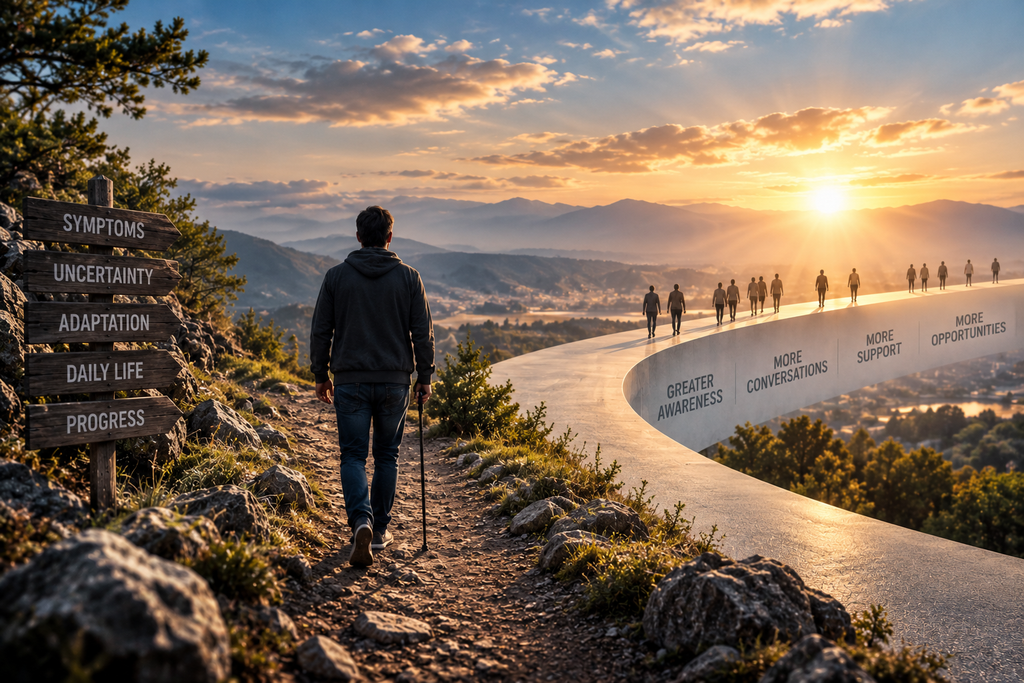
As my balance worsens, more people can learn what Ataxia is. I can write something that reaches thousands of people while I’m figuring out how to adapt to another change in my body. An awareness campaign can reach more people than ever, even as those of us living with the disease are still waiting for better treatments.
Being understood matters. Finding a community matters. Not having to explain from scratch why you walk, speak, or move matters differently. But when you’re living with a progressive disease, you eventually want more than understanding. You want something that can change the course of the disease.
I do.
I want scientists studying Ataxia and promising ideas to get the funding they need to explore them. And I want researchers to choose to enter the field and have reasons to stay, along with clinical trials that can recruit enough participants. Most of all, I want someone diagnosed with Ataxia ten or twenty years from now to have options that weren’t available when I was diagnosed.
That work is happening. In 2026, the National Ataxia Foundation funded 23 research studies totaling $910,000, including seed grants and awards supporting researchers at different career stages.
But rare-disease research comes with challenges. The FDA says that more than 10,000 rare diseases collectively affect over 30 million Americans, and the small number of people living with any individual rare disease can make clinical trials difficult.
That’s one reason visibility matters.
Not because an Ataxia post magically becomes a research grant. It doesn’t. But people can’t support research they don’t know about, join a study they don’t know about, or become interested in a disease they’ve never heard of.
I’ve written before about the role of the Ataxia patient registry in connecting people with research. That’s a much more concrete next step than simply being aware: people living with the disease helping researchers learn more about it.
I can’t draw a straight line from one of my articles to a research grant or to future treatment, and I may never know where something I’ve written eventually leads. That’s difficult when you’re the one living with the disease. Research takes time, while a progressive disease keeps moving whether you’re ready for the next change or not.
I understand why progress takes time. I still wish we had more of it.
Awareness is playing a long game while many of us living with the disease are watching a very different clock.
The Day After Awareness Day
International Ataxia Awareness Day is September 25. For one day, more people will talk about Ataxia. We’ll share stories, explain symptoms, raise funds, discuss research, and introduce the disease to people who may be hearing the term for the first time.
Then September 26 will arrive.
Most people will return to whatever normally fills their day, and I don’t think that means awareness failed. The goal was never to make everyone who sees an Ataxia post care about the disease as much as those of us living with it do.
I’m more interested in what remains.
I don’t think there’s a formula for that. Sometimes a statistic catches our attention. Other times it’s a photograph, a conversation, or one detail in a person’s story that makes an unfamiliar disease feel real. A disease we’ve barely thought about can suddenly become important when it enters the life of someone we care about.
That’s one reason I keep coming back to storytelling. Facts can teach us what Ataxia is, but stories give those facts life. Writing about my experience has connected me with people I probably never would have met otherwise, including people who don’t have Ataxia but recognize something familiar in the broader experience of having life change on them.
Awareness can also sit quietly in the background until there’s a reason to remember it. We hear about something, move on with our lives, and months or years later it becomes relevant because a friend receives a diagnosis, a family member develops symptoms, or another story brings the first one back.
Maybe someone remembers enough to understand why a person walking unsteadily may not be drunk. A friend becomes more comfortable asking questions rather than making assumptions. A family recognizes symptoms they’ve been trying to make sense of. Another person decides to learn more, support research, participate in a study, or share their own story.
Most of those outcomes will never appear in the numbers from an awareness campaign.
Often, I think about that in my own writing. I know how many people visit my website, but I don’t know what happens after they leave. I don’t know which article they remember, what they tell a friend, or whether anything they read becomes useful six months later.
I’m becoming more comfortable with the possibility that I may never know. A story can travel farther than the person who wrote it ever sees. It can become part of a conversation I’m not in or help someone I’ll never meet understand something they didn’t before.
At the same time, I don’t want to make that sound more comforting than it is. I’m still living with a progressive neurological disease. I want better treatments, research to keep moving forward, and people diagnosed in the future to have choices I didn’t have.
I can believe in the long game and still wish it weren’t quite so long.
The Floor Matters
When International Ataxia Awareness Day arrives, I’ll be glad to see the stories, facts, fundraisers, research updates, and conversations. I’ll add my voice, too. After decades of living with a disease most people have never heard of, I don’t take being seen for granted.
I just don’t want being seen to be where we stop.
That’s why I keep coming back to the question I started with:
What actually changes in your life the day after someone becomes aware of it?
Sometimes, maybe not much. Other times, we may not know for years.
Awareness can’t stop the progression in my body. It can’t create a treatment or fund research on its own. But it can give more people a reason to understand why those things matter and give whatever comes next a better chance.
Awareness is the floor, not the ceiling.
And maybe the question worth carrying forward after every awareness day isn’t only how many people we reached.
It’s what can happen now that couldn’t happen before they knew.
Keep the Conversation Going
If this is your first time learning about Ataxia, you don’t need to become an expert today. Learn a little more, read another person’s story, or see what’s happening in research. And if something here stays with you, carry it into the next conversation.
Learn more about Ataxia →
See what’s happening in Ataxia research →
Wear the message →
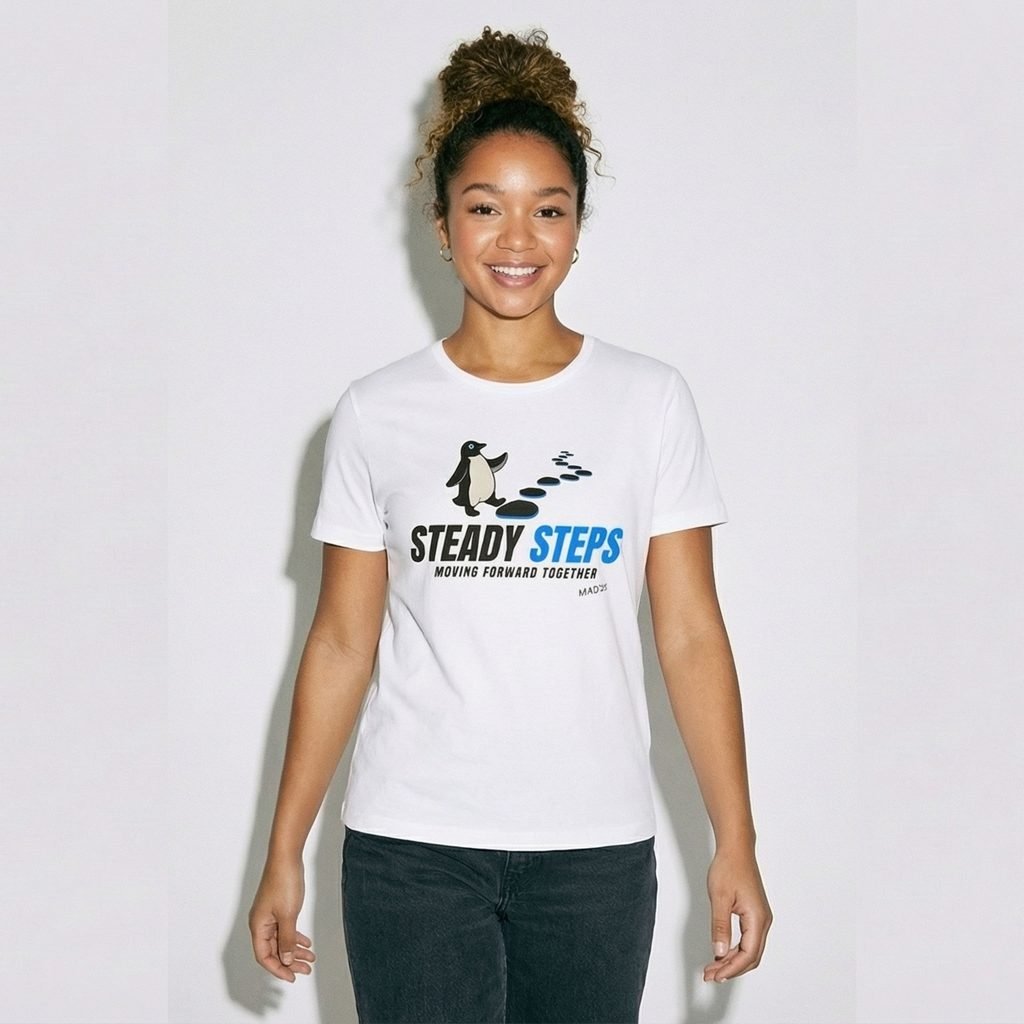
Steady Steps – IAAD Special Edition Tee
Created for International Ataxia Awareness Day. A portion of every sale supports research and awareness for Ataxia and rare diseases.
Join the Community →










