


There’s a moment, somewhere between the kitchen and the hallway, where I catch myself paying attention to how I’m walking. Not because anything dramatic happened. Just a slight shift, a half-second of recalibration, and suddenly I’m aware of my feet in a way most people never are. It happens in my own house. A place I know by memory.
That’s what progression feels like when it’s quiet. Not a fall. Not a crisis. Just a new level of awareness that wasn’t there before.
I have Spinocerebellar Ataxia. It’s a progressive neurological condition that affects coordination, balance, and movement, and for me, it has meant a lifetime of learning to read my own body in ways I never expected. The tremors, the balance shifts, the constant recalibrating. Some of it I’ve adapted to. Some of it still catches me off guard. And some of it, if I’m being honest, scares me.
What I’ve had to come to terms with, slowly and without a clean resolution, is that there is no finish line. No point where I’ll have managed this well enough to stop paying attention. Just the ongoing work of living inside a body that doesn’t follow a predictable script.
When the Story Doesn’t Have an Ending
People expect illness to follow a certain shape. You get sick, you deal with it, and eventually something resolves. You recover, or you don’t. Either way, the story moves toward an ending.
That’s not how this works.
There’s no treatment that reverses Spinocerebellar Ataxia. No surgery that resets things. Researchers are working on it, and that matters, but right now the goal is management. Staying as functional as possible for as long as possible. That’s what I’m working toward.
For a long time, that was hard to sit with. Not because I was in denial, but because everything around illness assumes a finish line. When you don’t have one, it can feel like you’re doing something wrong, even when you’re doing everything right.
You’re not. It just looks different.
The Months That Disrupted Everything
Last November, I fell and hurt my back. That stopped my workouts. After back injections and some time, I worked my way back here and there. Then the flu hit. Another break. Then, a few weeks ago, my head tremors returned after a three-year gap.
I wrote about that episode in detail here: When Head Tremors Return: Part 2.
What I want to talk about here is what that whole stretch revealed. Because stacked together, the back injury, the flu, the tremors, it added up to months away from the one thing that consistently helps me the most: exercise.
Every neurologist I’ve seen has said some version of the same thing. Stay active. Keep moving. Balance work, strength work, consistency. The research backs it up.
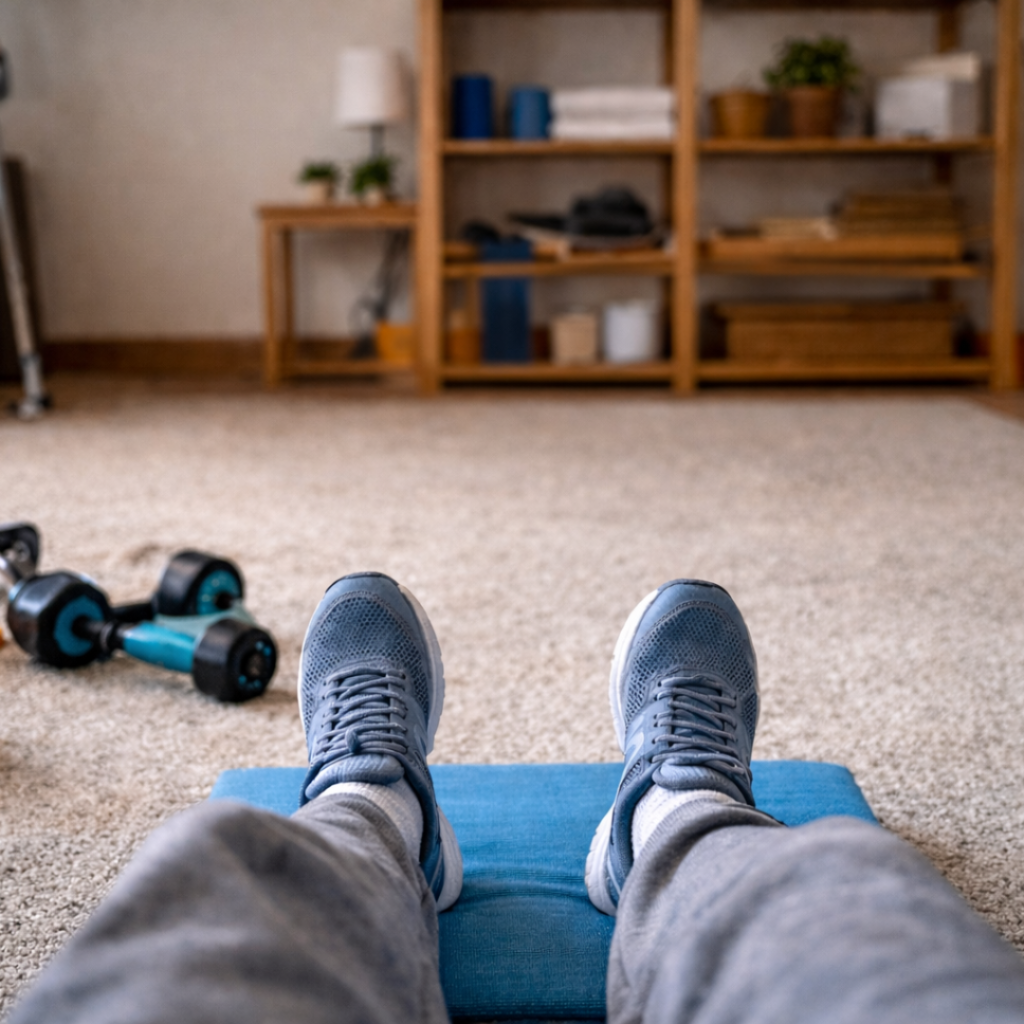
For people with Ataxia, regular physical activity is one of the few things that actually influences how the condition feels day to day. It doesn’t stop anything. But it creates a better foundation to live from.
So when months go by without consistent workouts, things shift. And then I’m left with a question I can’t fully answer: how much of what I’m feeling is the disease, and how much is just being out of shape? I genuinely don’t know. That uncertainty is part of the deal.
Walking to the Kitchen
Ten minutes before I started writing this, I almost fell walking to the kitchen. I caught myself. No drama. But I felt it.
Stiff joints. No routine to fall back on. Balance and coordination feel softer than they should. Every single day is a new adventure, and I mean that without any irony at all. Some days the adventure is fine. Some days it isn’t.
The tremors from the recent episode are mostly gone now. Most mornings, I still wake up with that unsettled feeling in my stomach, a low hum of unease that usually fades after a while. It’s happened before. I’m not panicking about it. But I notice it, the way I notice everything now, because that’s just how I move through the day.
There’s no morning when I stop noticing. That took a long time to be okay with.
What No Finish Line Actually Looks Like
It looks like getting back to the gym after three months away and not spiraling about what was lost. It looks like balance exercises in the living room on a Tuesday because every doctor I’ve had has told me that’s one of the best things I can do, and the research agrees. And it looks like walking to the kitchen, catching yourself, and moving on.
People sometimes ask how I stay motivated without a clear goal. The question assumes motivation is what drives this. It isn’t, not anymore. Motivation is too unreliable when conditions are unpredictable. What works better is just deciding that certain things happen regardless of how the day starts. You build the habit, and you protect it as best you can.
That’s not some inspirational resilience thing. It’s more like stubbornness with a plan.
Living with Spinocerebellar Ataxia has changed how I measure progress. I can’t compare myself to who I was without accounting for the disease. Recovery isn’t the goal. What I can do is pay attention, stay as consistent as possible, and accept that the work doesn’t end.
No finish line. Just the next day, and the one after that.
Keep Moving – That’s the Whole Note
If you’re dealing with a similar diagnosis, the consistent message from every doctor and every study I’ve come across is the same: keep moving. Balance training and regular exercise have real, documented benefits for people with cerebellar conditions. It won’t change the diagnosis. But it makes a difference in how you function day to day.
For more on what balance changes actually feel like from the inside, this piece gets into it: balance problems.

If any of this sounds like your experience, join the conversation. You can subscribe to the blog for new posts and the upcoming newsletter. If you’d like to support the work in another way, the InspireThread shop carries a small collection of designs centered on themes of resilience and identity.
No finish line there either. Just work worth doing.









Thanks Michael! I’m doing a blend of yoga and physiotherapy daily.
People ask where I get the motivation? The exercises help me to feel stronger and steadier and more ‘normal’ again. But it’s elusive. I must stay consistent to stay on top of them.