


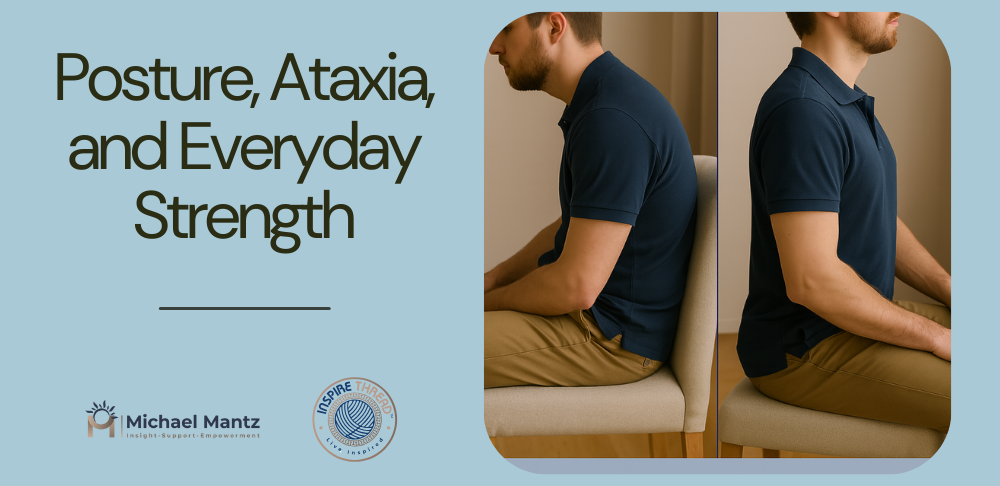
When most people think about posture, they picture a parent or teacher telling them to “sit up straight.” Everyone knows it’s important, but we rarely consider it until pain, fatigue, or balance issues remind us. For those living with Ataxia, posture isn’t just about appearance—it’s about movement, safety, and strength.
And I’ll be honest: posture has always been one of my weaknesses. At 6’4”, I’ve spent most of my life looking down at people, and that habit doesn’t exactly train you to stay upright. Combine that with Ataxia—where balance and coordination already don’t come naturally—and you’ve got a recipe for slouching, stiffness, or just giving up altogether.
But here’s the truth: posture matters more than most realize. It affects how steady we feel, how much energy we have, and how others see us. The good news? You don’t need to get it perfect. Small steps toward better posture can make a real difference.
Why Posture Matters
For anyone, good posture:
- Keeps the spine aligned and reduces wear and tear.
- Helps prevent back, neck, and shoulder pain.
- Makes breathing easier and more efficient.
- Conserves energy by letting muscles work the way they’re designed.
But with Ataxia, posture carries extra weight. Because core strength is often affected, holding your body upright takes more effort. Poor posture can magnify instability, increase fatigue, and even lead to more frequent falls.
Posture isn’t just physical—it’s functional. Every step you take is influenced by how you carry yourself.
How Ataxia Affects Posture
Ataxia makes it harder for the brain and body to stay in sync. That disconnect often shows up in posture:
- Leaning forward or to the side while sitting or standing.
- Locking joints or stiffening muscles to “stay steady.”
- Head-forward positioning that strains the neck and shoulders.
- Uneven weight distribution that throws off balance.
Over time, these habits can lead to scoliosis, spinal misalignment, or chronic pain. And because posture problems feed into balance problems, it can become a vicious cycle.
The Vicious Cycle
Here’s how it often plays out:
- Ataxia makes holding good posture more difficult.
- Poor posture weakens core muscles over time.
- Weak core muscles make balance worse.
- Balance problems lead to more falls—and even more tension.
Breaking that cycle starts with awareness. You don’t have to be “perfectly straight” all the time—you just need to give your body regular opportunities to reset.
Practical Posture Reminders
Here are a few simple cues that have helped me (when I remember them):
- “Ears over shoulders, shoulders over hips.” A quick check-in to stack everything in a line.
- Imagine a string pulling you tall from the crown of your head. This creates a gentle lift without stiffness.
- Use your environment. Sit back fully in your chair, adjust screen height, or put a sticky note on your desk that says “posture.”
- Reset breaks. Pause to roll your shoulders, stretch your chest, and re-align every hour.
Even if you only catch yourself once or twice daily, that awareness adds up.
Exercises to Strengthen Posture
Not every exercise works for everyone, especially with Ataxia. The key is adaptability. Here are a few safe, accessible movements to try:
- Wall Stand
- Stand with your back against a wall, heels a few inches away.
- Press the back of your head, shoulders, and hips lightly into the wall.
- Hold for 20–30 seconds, focusing on alignment.
- Seated Posture Reset
- Sit tall with feet flat.
- Roll shoulders up, back, and down.
- Engage core slightly and stack spine like building blocks.
- Wall Angels (if able)
- Stand with back against the wall, arms bent at 90°.
- Slowly raise arms overhead while keeping them near the wall.
- Great for opening the chest and strengthening the upper back.
- Seated Marches
- Sit upright, engage your core, and lift one knee at a time.
- Builds core awareness and balance without standing risk.
Remember: posture exercises aren’t about reps or perfection—they’re about teaching your body alignment and building awareness.
My Personal Perspective
I’ll admit I fail at this a lot. Being tall with Ataxia means posture has never been easy for me. I slouch, I lean, and most of the time, I don’t even notice until my back or shoulders start aching.
But here’s what I’ve learned: it’s not about “fixing” posture once and for all. It’s about catching myself in the act, even if just once during the day, and resetting. Every time I remember, I win. And over time, those small wins stack up.
Encouragement
Perfect posture doesn’t exist—not for me, not for you, not for anyone. But progress does.
Think of posture as both physical and symbolic. Standing taller isn’t just about your spine—it’s about visibility, confidence, and resilience. Even when Ataxia makes the path unsteady, carrying yourself with awareness sends a quiet message: I’m still here, still standing, still moving forward.
Final Thoughts: Posture as a Steady Step
Living with Ataxia comes with enough challenges—you don’t need posture to be one more thing that feels impossible. Start small. Reset often. Celebrate progress, not perfection.
And if you’re like me—tall, clumsy, and naturally prone to slouching—remember that posture isn’t about being flawless. It’s about showing up, realigning, and giving your body its best chance to move through the day with strength.
The Invitation
This article is part of the Steady Steps collection — practical guidance, tools, and everyday explanations for navigating Ataxia. If you found this helpful, don’t stop here.
- Explore the InspireThread shop for designs that spark awareness and remind you to stand tall.
- Join the blog community for more stories, tools, and steady steps toward living well with Ataxia.
- Read Explaining Ataxia to Friends and Family for tips on making conversations easier.
Because posture isn’t just about standing straighter—it’s about standing stronger, together.










