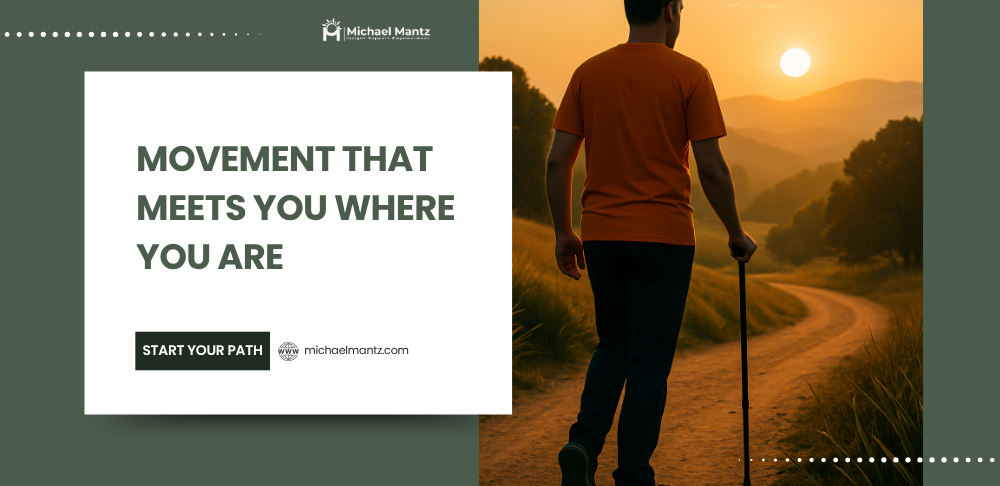
When you’re navigating exercise with Ataxia, it’s not about perfection—it’s about possibility.
Sometimes the smallest step in the right direction ends up being the biggest step of your life.
— Naeem Callaway
A few months ago, I asked my physical therapist something that had been on my mind for a while: “Is it possible to gain healthy weight/muscle in your 50s, when you have Ataxia, back issues, and a body that doesn’t always cooperate?”
She didn’t even blink.
“Absolutely. A 90-year-old can still build muscle,” she said. We both laughed, but her answer stuck.
Rethinking Exercise with Ataxia
I’m not trying to be a bodybuilder. I’m trying to feel better…stronger. I’m trying to invest in my future mobility and stability, especially since my Ataxia symptoms usually originate from my core. So, the goal isn’t aesthetics. Its function and longevity. It’s preparing for what’s ahead.
Redefining Exercise (The Old Way vs. The New Way)
In my 20s and 30s, “working out” usually meant pushing myself harder. Heavier weights. More reps. That “no pain, no gain” mentality. I chased performance, even when I wasn’t sure what I was performing for.
But things are different now. Exercise today has nothing to do with impressing anyone and everything to do with supporting the version of myself I’m becoming—not weaker, not lesser. Just… different.
What Movement Looks Like for Me Right Now
I’m still not working out as hard as I could, but I’m showing up, which counts.
Right now, I go to the gym four to five days a week. I also do daily home exercises, especially core work, balance drills, and movements that help support my gait. Some days, I feel strong, and some days, I feel awkward, but I move anyway.
A big part of my routine is listening to my body and how I’m adapting.
I initially increased my calories to help put on weight. And I did—too fast. It wasn’t the kind of weight I wanted. So, I adjusted. I scaled things back, kept fine-tuning, and now I’m up 3–4 pounds in a way that feels good. I feel stronger. My posture’s better. My energy lasts longer.
That small win keeps me going.
For Anyone Starting (or restarting)
If you’re living with Ataxia—or anything that affects your movement—it’s easy to feel discouraged. But I’ll say this as clearly as I can:
Movement is still possible. It just might look different from what it used to. And that’s okay.
Here’s what’s helped me:
- Stop waiting for motivation. Just begin. Show up. Let consistency build its momentum.
- Work with your body, not against it. There’s no shame in using a wall, chair, or lighter weights. Those are tools, not crutches.
- Celebrate the little things. A stronger step. More stability in the shower. An easier time getting out of the car. It all matters.
- Fuel smart. Gaining healthy weight isn’t about eating more—it’s about eating better for your body’s needs.
- Track progress by how you feel, not just how you look.
Final Thoughts: Strength, Rewritten
These days, I don’t measure strength by how much I lift. I measure it by how I feel and move through my day. Can I walk with more steadiness? Sit up without slouching? Catch my breath before the next thing pulls me off course? That’s what matters now.
I’m still figuring things out, one day at a time. But I’ve started building a healthier life that fits how I live now, not the version I used to imagine. And honestly? That change has made all the difference.
So if you’re on your path—rebuilding, slowing down, or just trying to feel more like yourself again—don’t worry about being behind. You’re not behind. You’re moving forward—just in a new direction.
This is still progress. It still matters, especially when you’re living with something like Ataxia or a condition that affects your balance, energy, or strength.
Begin with what you have, create what you need, and let your version of movement support the life you truly want to live.
Want to be part of the conversation? Join the community, wear the message, and let the world see you.
Explore the collection and discover more tools, stories, and honest reflections on living fully, even when the path isn’t steady.
This article is part of the Steady Steps series, which features real stories and reflections from people living with Ataxia and other movement disorders.