

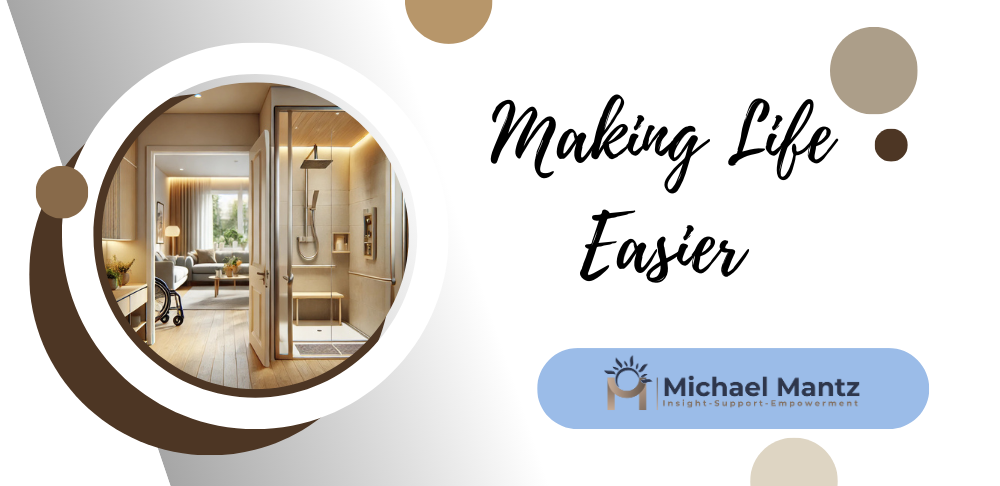
What do you consider when designing or renovating a home? Maybe you want the perfect kitchen layout or a dreamy walk-in closet. Those are great, but have you ever considered how your home could make life easier for someone with Ataxia or a similar condition? I recently read this question related to Designing Accessible Homes, in a Facebook group, and it’s a great subject. So, let’s dive in…..
Let’s start with something simple: wider doors and hallways. Have you ever tried to squeeze through a narrow space with a walker or wheelchair? It’s frustrating. (I’m not currently using a walker or wheelchair, but I can only imagine.) Wider doorways—at least 36 inches—and spacious hallways aren’t just nice; they’re life-changing. Imagine moving through your home without bumping into walls or awkwardly fitting through tight spaces. Remember, small changes can make a huge difference.
If you live with Ataxia, I don’t have to tell you, but stairs can feel like an uphill battle—literally. They’re exhausting and sometimes even scary. Reducing the number of steps to get into your home—or eliminating them—can change everything.
Imagine this: a zero-step entry, also known as a barrier-free entry. It’s not just about making things easier for mobility challenges……….It’s about creating a safer, more welcoming space for everyone—kids, grandparents, friends with strollers, you name it. If you’re building or renovating, adding a ramp or a gently sloped walkway is one of the smartest moves you can make. It might not feel urgent right now, but trust me, it’s one of those features you’ll be thankful for in the future.
Thinking Beyond the Basics
Doors, hallways, and steps are just the beginning. One thing I wish more people thought about is flooring. Slippery surfaces and uneven transitions are like hidden traps for those of us with Ataxia. Use non-slip flooring and minimize thresholds between rooms. Carpet can be tricky, too; while soft, it can make using a walker or wheelchair more challenging. Instead, consider hard surfaces like vinyl or hardwood paired with area rugs with non-slip backings.
What about lighting? Poor lighting and balance issues are not a good mix! Bright lighting is a must. And don’t forget about nightlights! They’re a simple, affordable way to make nighttime trips to the bathroom safer.
Let’s talk about bathrooms—where effective design can make a world of difference. Essential features include grab bars near the toilet and in the shower. If possible, a walk-in shower with a built-in bench is a game-changer. Whatever you do, just be safe!
The Kitchen: Heart of the Home
Let’s move to the kitchen. Usually, it is the heart of the home. But did you realize it can be one of the trickiest spaces to navigate? Lower countertops or adjustable height counters can make meal prep more accessible. Pull-out shelves in cabinets are another great feature—no more straining to reach something at the back. (I absolutely hate reaching for something in the back of a lower cabinet.) And think about the appliances: a wall oven at eye level, a side-by-side refrigerator, or even a dishwasher drawer can make a difference.
If you’re renovating, consider open shelving. It’s not just trendy; it’s practical. Seeing and reaching everything without opening doors can make daily life smoother.
Creating Spaces for R&R
Don’t forget about the bedroom. A bed that’s too high or too low can be a struggle. Adjustable beds are a great option. Choosing the right height can make getting in and out of bed much more manageable. And what about closets? Sliding or barn doors are much easier to manage than traditional hinged ones, and pull-down rods can make hanging clothes safer to access.
Where do you go for rest? Do you have a favorite spot?
A cozy corner with a supportive chair or recliner can be a lifesaver. It’s not just about comfort; it’s about creating a space to recharge.
Technology to the Rescue
Technology is constantly evolving, and it is incredible how much easier it can make daily life. Smart home devices like voice-activated lights, thermostats, and even blinds can reduce the need for physical movement. Imagine adjusting your lighting or temperature with a simple voice command or a tap on your phone. It’s convenience and accessibility rolled into one.
A Home That Grows with You
Something else to think about: designing a home that can adapt as needs change. Maybe you don’t need grab bars or a roll-in shower right now, but will you in the future? Planning ahead doesn’t just save time and money; it’s a way of future-proofing your home.
When I was first diagnosed with Ataxia, I didn’t think much about how my living space was set up. I was 28, and everything was mild. But as the years passed and my symptoms got worse, I wish I’d made some different choices early on. Now, whenever I hear someone is building or renovating, I can’t help but jump in with a few suggestions.
Side note: an accessible home isn’t just for people with Ataxia. It’s for everyone—the friend on crutches, the grandparent who struggles with stairs, or even the parent trying to navigate with a stroller.
Let’s Keep the Conversation Going
So, what do you think? If you were building or renovating a home, what features would you include to make it more accessible? Wider doors and hallways, zero-step entries, and non-slip flooring are a great start, but we can always do more. Maybe you’ve thought of something I haven’t. If so, I’d love to hear your ideas. Let’s keep this conversation going because we all benefit when we share our experiences and insights.
An accessible home is about more than practicality. It’s about creating a space where everyone feels safe, comfortable, and welcome.
Please share your thoughts and/or comments on this or any other article. And if you would like to get involved and share your experience with Ataxia, don’t hesitate to contact us. Join Our Community today, where we empower you to build a healthy lifestyle and raise your overdue ataxia awareness. Experience transformative storytelling and share your story to inspire positive change.