


Most people don’t think about their home as a risk until it becomes one.
Tricky steps. Slippery rugs. A bathroom with nothing to grab onto. For most people, these are minor inconveniences. For anyone dealing with balance issues, they can be something else entirely – the difference between a normal Tuesday and a trip to the ER.
I have Spinocerebellar Ataxia, so balance issues are part of my daily reality. One thing I’ve learned over time is that the home environment matters more than most people think. Small changes add up, and most of them don’t cost much either.
This is a practical guide for anyone dealing with balance challenges or anyone who loves someone who is.
Start Where You Fall
Before you spend a dollar, pay attention to where things actually go wrong. Most people have a pattern, a specific spot where they lose footing, grab for something that isn’t there, or just feel off. For many, it’s the bathroom. For others, it’s the kitchen, the entry, or the path between the bed and the door in the dark.
Start there. Fix the highest-risk spots first.
Ask yourself: Where have I stumbled recently? Where do I feel least confident? Where am I moving on autopilot when I should be slowing down?
That last one matters more than people realize. As I wrote in Living in Slow Motion: What It’s Really Like to Move Differently, the way you move through a space and the space itself are more connected than most people think.
The Bathroom: Start Here
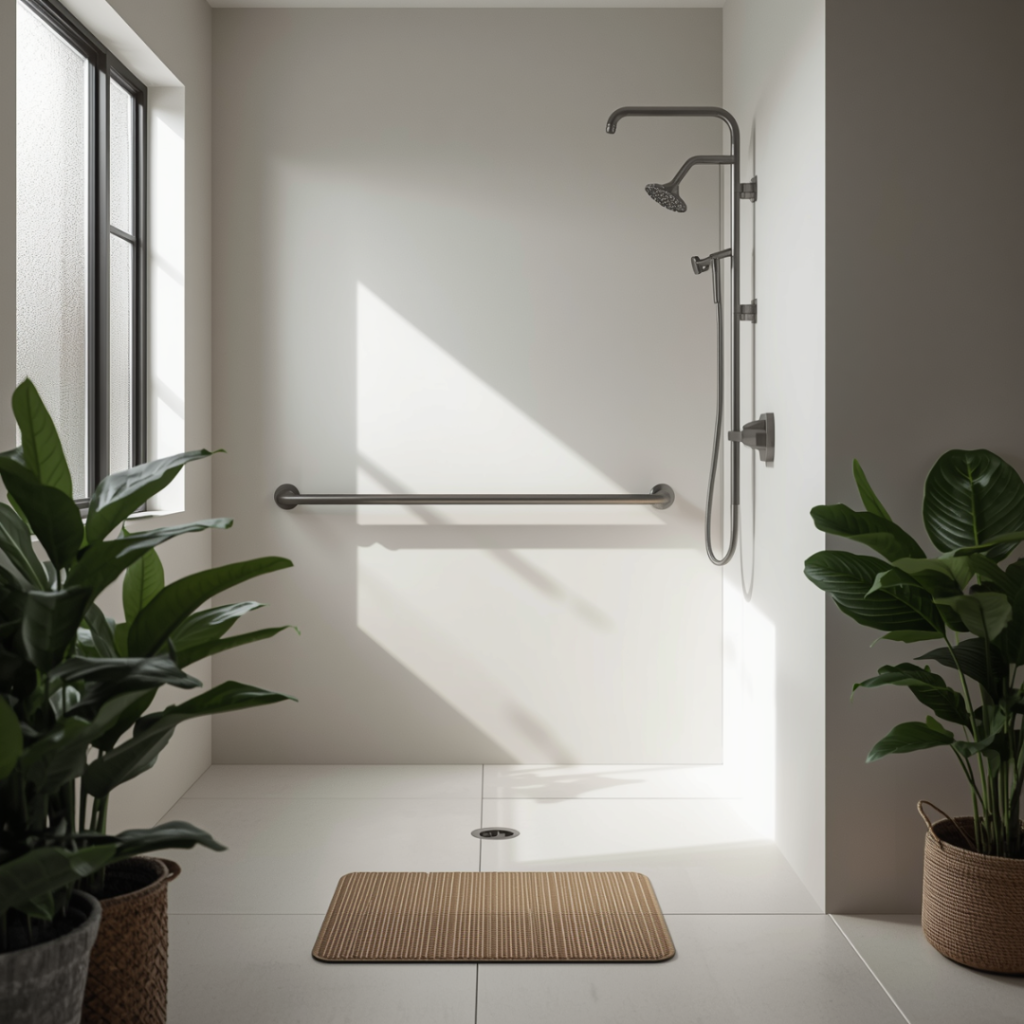
The bathroom is where most falls happen. Hard surfaces, water, and tight spaces, combined with you being tired or moving fast, make it a bad combination.
Grab bars are the single most effective change you can make. Not the suction-cup kind… those fail when you actually need them. Properly anchored grab bars near the toilet and inside the shower or tub are worth installing correctly. If you rent, some landlords will approve them. It’s worth asking.
Non-slip surfaces come next. A textured mat with a rubber backing inside the shower, and a non-slip rug outside. Get rid of any decorative rugs that slide or bunch.
A shower chair or bench is not a sign of defeat. It reduces fatigue, improves stability, and lowers the risk. Pair it with a handheld showerhead, and the whole experience changes when balance is unreliable.
And lighting – nighttime bathroom trips are a common cause of falls. A plug-in night light in the hallway and bathroom costs a few dollars and eliminates one more variable.
The Bedroom: Where Falls Often Start
Getting in and out of bed sounds simple. It’s not. Your body goes from flat to upright, and that shift takes longer than most people allow. Rushing it is usually when things go wrong.
Bed height matters. You want your feet flat on the floor when you’re sitting on the edge. Too high and the drop is destabilizing. Too low and getting up takes more momentum than it should.
Keep something sturdy within arm’s reach of the bed, such as a nightstand or a chair. A lamp you can reach without stretching, or a voice-controlled smart bulb. Just something that ensures you’re never navigating in the dark.
Clear the floor between the bed and the door. Charging cables, shoes, and anything that shifts underfoot at 2 am. It all has to go.
Living Areas, Hallways, and Stairs
Furniture placement is something most people set once and forget. For anyone with balance challenges, it’s a functional decision worth thinking about periodically.
Think of furniture as support. Arrange pieces so there’s always something stable within a step or two – a chair back, a sofa arm, or a console table along a wall. You can create a natural path through the room without making it look clinical.
Rugs are one of the most common hazards in a home. Any rug that slides, curls at the edges, or sits on a hard floor without a non-slip pad is a problem. Secure them properly or take them out. That’s a harder decision when a rug means something to you, but it’s the right one.

Keep hallways clear. No shoes by the door, no bags on the floor, nothing with legs sticking out. If you use a cane or walking aid, you need room to move without squeezing through.
Check your stair rails. A wobbly rail is worse than no rail (it gives you false confidence). If stairs are part of your daily routine, both sides should have something solid to hold.
Lighting: More Important Than It Sounds
Bad lighting is an underrated problem. When you can’t see well, you second-guess every step. You slow down the wrong way, and that hesitation can throw everything off.
The spots that matter most: stairways, hallways, the path from the bedroom to the bathroom, and entry points. Motion-activated lights are worth it because they’re on only when you need them. Smart bulbs with voice control are easy to add and don’t require any rewiring.
And don’t underestimate the power of natural light during the day. A well-lit room just feels easier to move through.
Adaptive Equipment Worth Considering
There’s a difference between equipment that solves a real problem and equipment that sits unused in a closet. Focus on what works for your life.
A few things to consider: a reacher or grabber for items on high shelves or the floor, non-slip socks for indoor use on hard surfaces, a shower chair, as mentioned above, and lever-style door handles if round knobs are hard to grip.
If you want a professional set of eyes on your space, the American Occupational Therapy Association is a good resource for finding a qualified occupational therapist who can assess your home and spot things you might not think to look for on your own.
Small Changes, Real Difference
You don’t need to renovate your home to make it meaningfully safer. Start with the bathroom. Fix the lighting. Clear the floors. Check the rails.
None of this is about limitation. It’s about removing friction so your energy goes toward living rather than managing unnecessary risk in your own space.
If any of this resonates, join the community at michaelmantz.com for more practical content on movement, wellness, and navigating life with a neurological condition. And if you’re looking for something that reflects that same mindset, take a look at InspireThread – designs built around identity, not diagnosis.










