There’s a moment after a major life change – injury, illness, relocation, relationships, career changes – when something feels like it disappeared.
Not paused, not adapting, just gone.
It doesn’t arrive dramatically. It shows up in quiet sentences:
“I’m not that person anymore.”
“That chapter’s over.”
“I can’t do that the way I used to.”
Over time, what begins as a shift in confidence can harden into a sense of identity loss.
But often what disappears isn’t identity.
It’s the structure that reinforced it.
Why Identity Depends on Structure and Reinforcement
Identity doesn’t live in isolation. It grows inside repetition – inside rooms you know, rhythms you understand, feedback you can count on.
Confidence strengthens when you operate in familiar territory. Authority builds when people respond to you. Momentum grows when conditions support it.
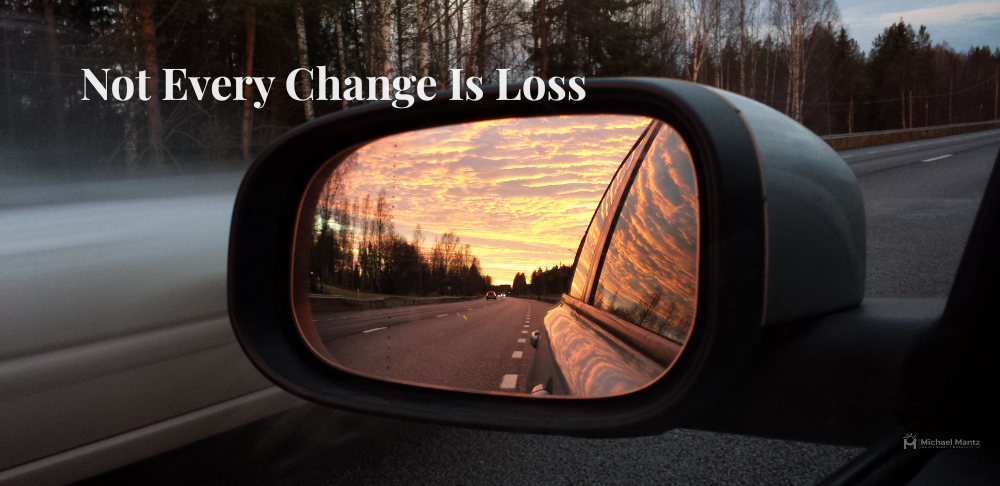
Those environments act like mirrors. They reflect a version of you back to yourself until it feels stable.
When the environment shifts, the mirror changes. And when confidence loses reinforcement, it has less to stand on. The mind doesn’t like that gap. It fills it quickly, usually with a tight story. Something like, “That part of me is over.”
How Life Disruption Can Erode Confidence
After my accident in 2019 and the stretch of change that followed, I sold my financial practice – a period I wrote about in Choose Your Path.
The practical reasons were clear. The internal shift was quieter.
What unsettled me wasn’t the industry itself. It was the erosion of confidence. Not dramatic insecurity, but steady questioning.
- Am I still sharp?
- Still steady?
- Still convincing?
Without the structure that once reinforced that version of me, confidence didn’t feel automatic anymore. And when confidence dropped, it was easy for me to assume something deeper had disappeared.
Why We Mistake Friction for Identity Loss
This isn’t limited to career. It shows up in many areas of life.
- Dating after a health shift.
- Friendships, when your energy changes.
- Travel, when logistics feel heavier than they used to be.
You pull back. The expression changes, and the reinforcement weakens.

And the story forms quickly:
That part of me is gone.
But often what changed wasn’t the core trait. It was the container.
The skill may still exist. So might the desire. But without reinforcement, it feels distant.
There were months when I couldn’t tell whether I had changed or just lost momentum. That doubt is uncomfortable. Especially if you’re someone who tends to be harder on yourself than necessary.
And if you live with a chronic condition like ataxia, subtle shifts can feel amplified. I explore that internal layer further in Hidden Challenges, where the outside world doesn’t always reflect what’s happening internally.
Not Every Change Means You’ve Lost Yourself
Some capacities do change, and some losses are real. Naming that honestly matters.
But not everything that changes is gone. Sometimes it’s a redesign.
The question becomes less about whether you can do something the way you used to and more about whether the structure still fits who you are now.
When I stepped away from traditional advising, structured thinking didn’t disappear. Education didn’t disappear. The ability to combine complex information didn’t disappear.
The format changed.
Different container. Same underlying traits.
That’s not optimism. It’s structural awareness.
Before You Decide That Part of You Is Gone
If something feels gone, pause before cementing that conclusion. Did the identity disappear, or did the environment that reinforced it disappear? Sometimes what feels like loss is the removal of familiar mirrors.
And without those mirrors, it takes time to recognize yourself again.
Sometimes the mirror changes. That doesn’t mean you disappeared. It means your confidence dropped, and the story filled in the rest.
Stay Connected
If you’re navigating identity shifts after illness, injury, or a major life change, you’re not alone in recalibrating your identity.
Here I write about living with ataxia, adaptation, steadiness, and building meaningful structure after disruption, without forced positivity or pretending that loss doesn’t exist.
You can Join the Community to receive new reflections as they’re published.
And if you’d like to support awareness and research in a tangible way, the Steady Steps collection inside InspireThread helps fund ataxia initiatives while keeping the message visible.
Different form doesn’t mean diminished. Sometimes it just means you’re rebuilding with a clearer structure.