

“Oh no.”
That’s all I had time to think as gravity took over.
Time slowed in that way it did when you knew what was coming and there was nothing you could do to stop it. A millisecond stretched into forever, a slow-motion movie scene where the outcome was already written. I was six feet four inches tall, arms full of papers and keys, stepping up into my kitchen like I had a thousand times before. But this time, my body didn’t cooperate.
And down I went.
I’d fallen before. Plenty of times. Trips, stumbles, near misses—you name it. Most of the time, I’d shake it off and act like nothing happened. Sometimes, I even laughed, even when it wasn’t funny. It was easier to call myself clumsy, too tall, or distracted than to admit anything else was going on. And maybe I believed that for a while. But San Diego was different. That one I felt in my gut. That one I couldn’t talk my way out of.
Why This Fall Was Different
It wasn’t just the impact — though that was bad enough. My tailbone hit first, a brutal jolt that shot up my spine. Then my head, cracking against the concrete with a force that left me stunned, vision blurred, ears ringing. I couldn’t breathe. My body locked, as if it was deciding whether or not to keep going.
But what made this fall different wasn’t only the pain. It was the silence afterward. Lying there on the cold garage floor, I couldn’t pretend anymore. Something was wrong, and it wasn’t just bad luck or bad shoes. My body wasn’t keeping up with the story I’d been telling myself.
If you’ve ever had that moment — flat on the ground, waiting to see if you’re broken — you know the silence I’m talking about.
That’s the thing about Ataxia: the signs are there long before you recognize them. Looking back, I can see plenty of clues — my handwriting changing, the way friends joked about my “stiff” movements, those awkward moments in gym class that I shrugged off. But in real time, you learn to work around them. You build habits, you make excuses, you keep going.
Until the moment you can’t.
The Illusion of Control
At that time, I was an independent financial advisor. I liked the rhythm of my work — the client meetings, the sense of building something on my own terms —and the illusion of control it gave me. I thought I could manage everything: my schedule, appearance, and body.
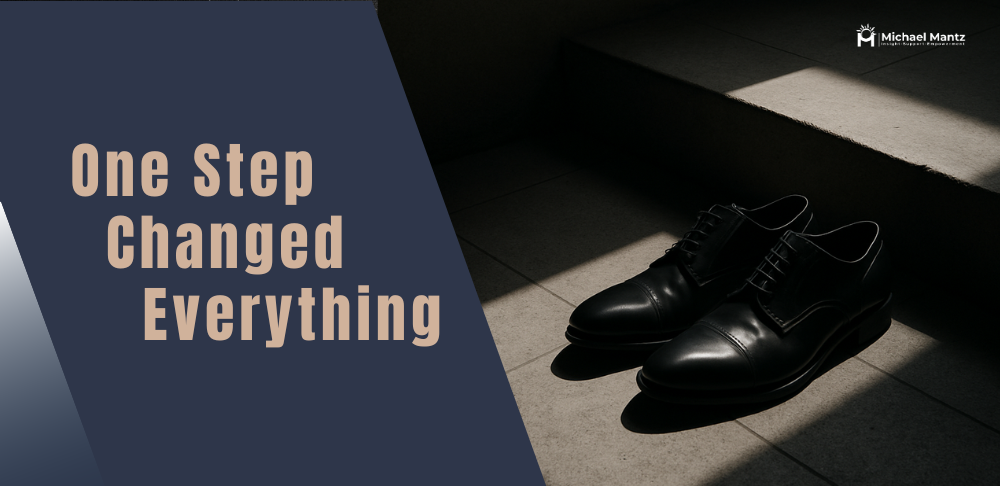
That’s why I wore dress shoes with a little heel that shifted my balance, why I carried too much in my hands instead of making two trips, and why I told myself the heat, the long morning, or maybe hunger explained the dizziness.
But lying on that concrete floor, none of those excuses mattered.
The crack of my head on the concrete wasn’t the worst part. The worst part was knowing I couldn’t fake it anymore.
When Pretending Stops Working
We all pretend, in one way or another. We pretend we’re fine when we’re not. We pretend we have more time, more energy, more strength than we really do. Sometimes it works. Sometimes the pretending gets you through the day.
But when you’re living with a condition like Ataxia, pretending only works until it doesn’t. And when it breaks, it breaks hard.
That San Diego fall was the one that stayed with me. I’d used every excuse in the book before: clumsy, distracted, tall-guy legs getting in the way. They worked for a while. I even believed them some days. But this time? No. I knew what it was. I’d known for years. Ataxia. Still, I kept telling myself I had more control than I did. That day stripped the lie away. I couldn’t laugh it off. Couldn’t just move on. Something shifted. I felt it in my gut — that pretending game was over.
Why I’m Sharing This
I didn’t tell this story back then. I brushed myself off, limped inside, splashed cold water on my face, and tried to move on. But these are the moments that define the journey — the moments that remind you life is shifting beneath your feet, whether you’re ready or not.
And here’s the truth: falling isn’t the end. It’s the beginning of figuring out what comes next.
If you’re living with Ataxia — or any rare condition — you probably have your own version of this story. A moment when pretending stopped working. A moment when you couldn’t ignore it anymore. That doesn’t make you weak. It makes you real.
I still fall. But I also still stand. And that’s what matters.
If you want to read more, I’ve shared stories like My Journey and how I process moments like this in Fall and Strength: Navigating Life with Ataxia.
Final Thought
This isn’t just about falling. It’s about honesty. With yourself, with others, with the life you’re actually living.
Tomorrow, I’ll stand again. Because no matter how many times I fall, I don’t stay down.
**This is one of many stories I’ve been putting into my upcoming memoir — the raw, unfiltered moments that shaped my path. If you’ve connected with this one, you’ll recognize the same voice and truth running through the book.
If this story resonated with you, share it with someone who might need to hear it. For more stories, insights, and tools for navigating life with Ataxia, subscribe at MichaelMantz.com.
You can also support awareness through InspireThread. Every design tells a story of resilience and connection, and a portion of the proceeds supports Ataxia research. Together, we’re building this path, one steady step at a time.










Love this post! Thanks for the inspiration and authenticity. I admire you!
Thanks Amber for all of your help!