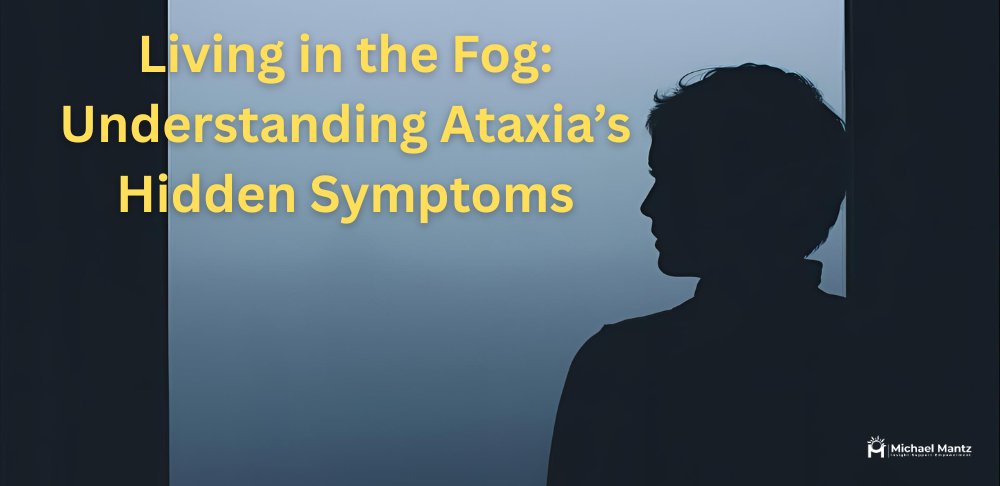
Ever walk into a room and forget why you’re there? Now imagine that fog lasting all day. That’s what brain fog in Ataxia can feel like. I’ve been there. As my Spinocerebellar Ataxia (SCA) has progressed, these moments have become more frequent. It’s like starting the day with your headlights dimmed — you can still move forward, but everything looks a little blurred.
Life with Ataxia is already like walking a tightrope. Add confusion or brain fog, and suddenly even the simple things — following a conversation, remembering where you left your keys, or finishing a task — can be frustrating.
But what exactly is “brain fog,” how is it different from confusion, and why do so many people with Ataxia experience it?
Understanding Ataxia: More Than Movement
Most people think of Ataxia only as a coordination issue — stumbling, shaky hands, slurred speech. But there is so much more.
Ataxia refers to a lack of muscle control during voluntary movements. Penn Medicine states, “Ataxia may be a symptom of another underlying condition, or it may be its own disorder.” Depending on the type, Ataxia might throw off balance, coordination, or even how your body senses movement.
- Cerebellar Ataxia: the cerebellum (the brain’s “control center” for coordination) is affected.
- Sensory Ataxia: results from damage to sensory nerves.
- Vestibular Ataxia: linked to problems in the inner ear and balance systems.
Causes vary — from genetic mutations like SCA, to stroke, trauma, or even vitamin deficiencies. But what often surprises people is that Ataxia doesn’t just live in the body. It can live in the mind, too.
Brain Fog vs. Confusion: Clearing the Difference
Think of brain fog as a dimmed light bulb. The light’s still there, but weaker — making concentration, memory, and focus harder.
Confusion, on the other hand, is like a flickering bulb. It’s unpredictable, disorienting, and sometimes more severe. You may lose track of conversations or struggle to process new information.
Both can feel like navigating through heavy weather without a map.
Why Ataxia Can Cause Brain Fog
The cerebellum coordinates movement, memory, learning, and attention. When there is an issue, any or all of these can suffer.
Ataxia doesn’t just trip up your steps — it can trip up your thoughts too. The same parts of the brain that help us walk straight are also tied to memory and focus, which is why that mental haze shows up.
For me, this shows up as forgetting what I was about to say mid-sentence, losing track of a task, or simply feeling mentally “slowed down.”
Recognizing the Signs
If you live with Ataxia, you might notice:
- Difficulty concentrating or following instructions
- Forgetfulness, even with familiar routines
- Trouble finding the right words
- Feeling mentally tired even after resting
They can be frustrating, sure, but they’re also a lot more common than most people realize. And the good news is, once you see the pattern, you can start finding ways to work around it.
Managing Brain Fog and Confusion
There’s no magic cure, but there are steps that can help:
Medical & Therapeutic Options
- Neurofeedback therapy: I’ve written about this HERE — it’s one tool I’ve explored.
- Cognitive therapies: CBT or occupational therapy can teach strategies to work around cognitive challenges.
- Medications: Sometimes prescribed for anxiety or focus, depending on your situation.
Lifestyle Shifts
- Movement matters: Exercise increases blood flow to the brain. Walking, swimming, yoga, or even tai chi can help the body and mind.
- Rest counts: Prioritizing quality sleep is one of the simplest (and hardest) ways to reduce brain fog.
- Nutrition helps: Leafy greens, fatty fish, and nuts support brain health. On the flip side, too much sugar, processed food, or caffeine can make fog worse.
- Organization tools: I live by planners, reminders, and breaking tasks into steps. It turns a mountain into a series of smaller, doable hills.
The Role of Support
Brain fog and confusion don’t just affect the person with Ataxia. They ripple out to families, friends, and caregivers.
For loved ones, patience and understanding go a long way. For caregivers, encouraging independence while offering help builds confidence instead of taking it away.
And for all of us, whether patient, caregiver, or friend, support groups — online or in-person — remind us we’re not walking through the fog alone.
Living in the Fog — and Finding Clarity
Ataxia brings many challenges, and confusion or brain fog can sometimes feel like the hardest to explain. But understanding them and knowing you’re not alone makes things better.
For me, clarity doesn’t come all at once. It comes in moments. A good workout, a laugh with a friend, a quiet morning with coffee. Those moments matter.
Final Thoughts & Next Steps
If you’re living with Ataxia, or supporting someone who is, remember this: the fog may not always lift completely, but there are ways to brighten the path.
Stay consistent with healthy habits, be open with your loved ones, and connect to a community that understands.
Join our community today. At MichaelMantz.com, you’ll find stories, tools, and resources to help you build a healthier lifestyle and raise overdue Ataxia awareness. If you want to wear your story, explore InspireThread, an awareness apparel designed to spark conversations and build community.