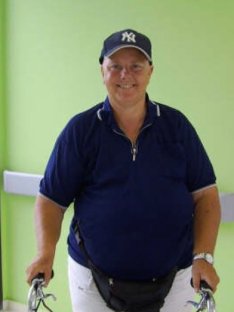

Living with Ataxia isn’t easy, and no one knows this better than Martha Harlam. Diagnosed with this progressive neurological disorder in 1988 at the age of 38, Martha’s life took a drastic turn. Now, at 69, she reflects on the challenges, losses, and unexpected blessings that have shaped her journey over the years.
Martha’s story begins with her passion for singing.
As an aspiring opera singer in Europe, her future seemed promising until Ataxia began to strip away her mobility, balance, speech, and motor skills. The greatest heartbreak was having to give up her singing career, a dream that had fueled her for years. But in the face of this devastating loss, Martha found love and companionship—a silver lining in the dark cloud of her diagnosis. She emphasizes the importance of not facing this journey alone. Having someone by your side, especially in the face of a debilitating condition like Ataxia, can make all the difference.
Acceptance played a key role in Martha’s ability to move forward. Instead of allowing Ataxia to define her entirely, she chose to embrace her new reality and make the most of it. Her time in Germany and Spain proved to be pivotal. In Germany, she honed her management and organizational skills, while in Spain, she fulfilled a dream by providing hospice care and palliative services to the Costa Blanca community.
Ataxia is what Martha describes as a “creepy crawly disease.”
It’s a slow and progressive disorder that doesn’t necessarily cause death directly but leads to severe complications that can drastically affect one’s quality of life. Despite these challenges, Martha has maintained a positive attitude, which she credits as the key to her resilience. She offers valuable advice to others in similar situations: maintain a positive outlook, surround yourself with supportive people, find joy in life, and don’t be afraid to ask for the help and equipment you need.
Martha’s understanding of life and faith has also played a significant role in her journey. She lives by a Judeo-Christian ideology, embracing the teachings of the 10 Commandments and judicial law, and finds solace in the power of music. Music, for her, is more than just a pastime; it’s a way of maintaining her mental health and turning a challenging situation into something positive.
As Ataxia progresses, it brings with it a host of physical and emotional challenges. Martha discusses the emotional toll of the disease, highlighting issues such as depression, anxiety, and the burden it places on caretakers. The physical complications include cardiological problems, loss of muscle coordination, and incontinence, all of which have significantly impacted her daily life. Yet, through it all, Martha has found ways to cope, utilizing medication, technological aids, and the support of her caregiver to maintain as much independence as possible.
Looking toward the future,
Martha has made a decision that reflects her commitment to the fight against Ataxia. She has arranged to donate her brain tissue to the University of Barcelona Ataxia Center for research after her death. This donation, she hopes, will contribute to finding a cure for this debilitating disease, allowing her legacy to live on in a meaningful way.
Martha’s story is a testament to the power of positivity, acceptance, and the human spirit’s ability to overcome even the most daunting challenges. Her journey with Ataxia has been anything but easy, yet she has managed to find light in the darkness, leaving behind a legacy of hope and resilience.
For more details, please read the article HERE.
We would like to thank Martha for sharing this inspirational story with us.
Please share your thoughts and/or comments on this or any other article. And if you would like to get involved and share your experience with Ataxia, don’t hesitate to contact us. Join Our Community today, where we empower you to build a healthy lifestyle and raise your overdue ataxia awareness. Experience transformative storytelling and share your story to inspire positive change.