


At age 16, I was diagnosed with a genetic neurological disorder called Friedreich’s Ataxia. I’d been experiencing symptoms since age 11 with no logical explanation up to then. I staggered when I walked, I couldn’t carry a cup of water, and I dropped things a lot. But little did I know that my body cells……..
At age 16, I was diagnosed with a genetic, neurological disorder called Friedreich’s Ataxia.
I’d been experiencing symptoms since age 11 with no logical explanation up to then. I staggered when I walked, I couldn’t carry a cup of water, and I dropped things a lot, but little did I know that my body cells were struggling to produce the protein called frataxin that stabilizes our balance. Since then, I’ve traveled a rough but ultimately redemptive path from denial (thinking I’d stay in the current state) to anxiety and pain (caused by worsening symptoms) to humility (finally starting to use a walker in public) to contentment (growing accustomed to a starkly visible sign of disability) to happiness (using a lightweight wheelchair that enables more mobile independence than ever).
People often ask, “What happened to your legs?”
I sometimes find this awkward when it’s a random cashier or someone else I’ve never met, but I like to think of myself as beyond a level of petty self-pity. Anyways, I’ve developed a layman’s explanation to directly address the (non-hostile) ignorance in assuming that bodily injury equals a wheelchair. Here’s my explanation: “I have Friedreich’s Ataxia. Walking requires balance and strength. Paraplegics typically have balance without strength. Their hand-eye coordination is fine and they’d be able to walk if their legs weren’t paralyzed. I, on the other hand, have the strength but not the balance. I keep my muscles strong by working out, but I can’t walk across the room without holding on to someone…and I don’t trust myself with sharp objects.”
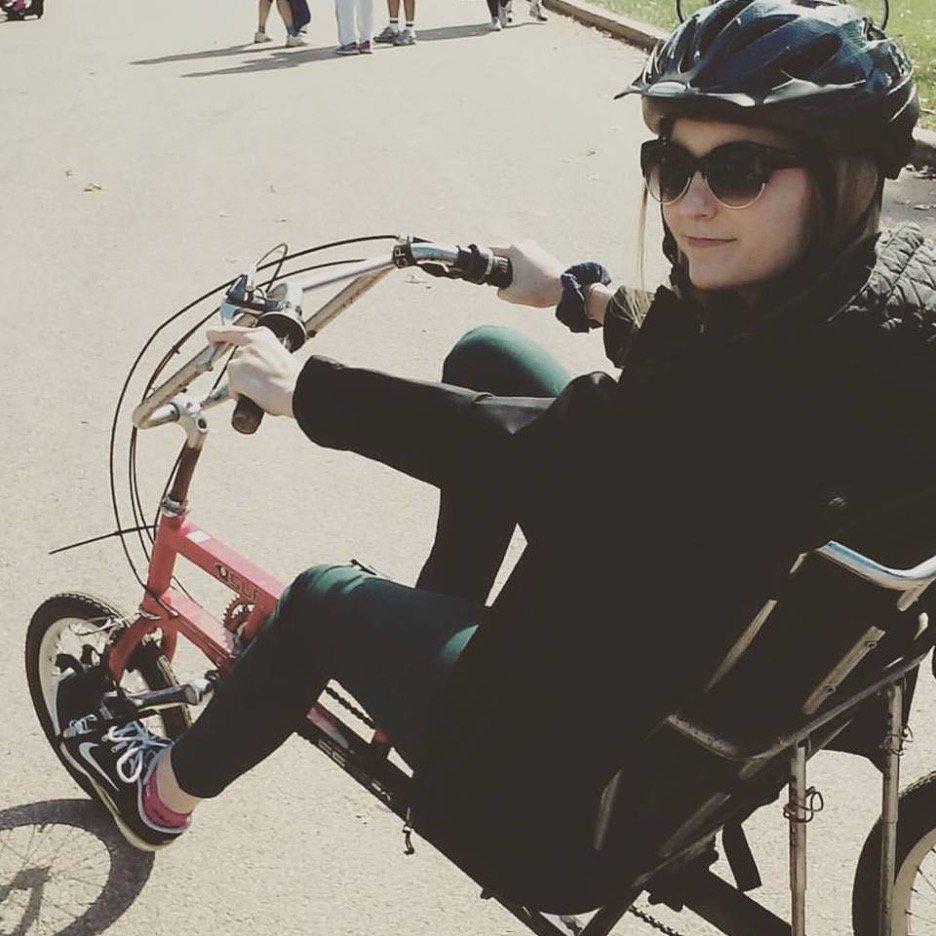
FA’ers can participate in fundraisers through rideATAXIA where they ride trikes (able-bodied participants ride bikes).
FA involves more than that–fatigue, heart issues, etc–but whatever, it succinctly clears up a misconception about people in wheelchairs.
I think part of the reason people are curious is because I don’t “look” handicapped. My muscles are toned rather than atrophied. Ironically, the progression of my disability has pushed me to care more about my physical body. I guess I treasure every ability I still have, whether it’s driving or taking a shower alone.
When I go with someone to Walmart, they usually ask if I want to use a scooter. I like rolling myself around, so my smart-ass response is usually, “Those are reserved for lazy people!”
Share your thoughts and/or comments and join our community today. A place where we empower you to build a healthy lifestyle and raise overdue Ataxia Awareness. Experience transformative storytelling and share your story for inspiring positive change.